Source Anti-Static Transparent Acrylic Sheet for Signage, Architecture, and Instrument Panels
Compare 30 listings for anti-static transparent acrylic sheet from verified Chinese manufacturers. Evaluate tensile strength, thickness, and customization options for advertising boards, architectural decoration, and instrument covers.
Key considerations
Products List


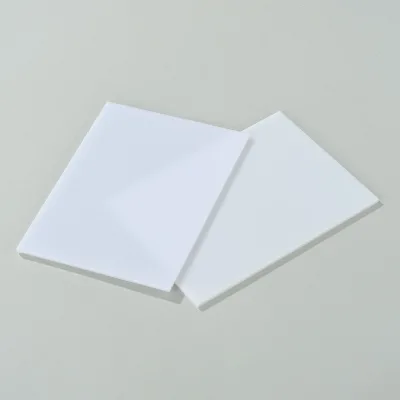
Comprehensive Sourcing Guide
Strategic Sourcing Guide for Anti-Static Transparent Acrylic Sheets
Understanding Material Properties and Technical Specifications
When sourcing anti-static transparent acrylic sheets, buyers must first distinguish between the inherent optical qualities of the base material and the specific functional additives required for static dissipation. The provided product data indicates that the core material is Acrylic, often marketed as a transparent plastic sheet or clear plastic sheet. A primary technical observation for these materials is their exceptional light transmittance, which can reach up to 93%, making them a superior alternative to glass for applications requiring high visibility. The density of the acrylic sheet is observed in the range of 1.19 to 1.2 g/cm³, a critical metric for calculating shipping costs and structural load requirements in large-scale projects.
The mechanical performance of these sheets varies significantly depending on the manufacturing process and specific formulation. Data suggests two distinct profiles for tensile strength: one range falling between 4150 MPa and another extending to 81130 MPa. Similarly, water absorption rates differ, with some observations noting a range of 0.2%~0.3% while others indicate values as low as less than 0.01% or as high as 1.5%~3.5%. These discrepancies highlight the importance of verifying the specific grade of acrylic before procurement. For anti-static applications, the contraction percentage is a vital parameter, observed in the data as ranging from 0.4%~1.4% or being less than 0.4%. Buyers must ensure the selected sheet meets the dimensional stability requirements of their specific end-use environment to prevent warping or cracking under stress.
Thickness is another fundamental specification that dictates the sheet's application suitability. The available thickness ranges in the market data span from 1.8mm up to 50mm, with some specific listings noting a range of 1mm to 40mm. This wide variability allows for customization in architectural panels, signage, and protective covers. The standard sheet dimensions frequently observed include 1220mm x 2440mm, 1220mm x 1830mm, and larger formats such as 2000mm x 3000mm or 2050mm x 3050mm. While the base material is often clear, white, or colored, the "anti-static" attribute is a functional addition that must be verified through specific testing rather than assumed from the visual appearance of the sheet.
Compliance, Certification, and Safety Standards
In the realm of industrial procurement, compliance with international safety and environmental standards is non-negotiable. The supplied product information explicitly references the REACH standard regarding the nontoxic nature of the material. This is a crucial verification point for buyers operating in the European Union or those supplying products to markets with strict chemical regulations. While the data mentions REACH, it does not provide specific certification documents or test reports. Therefore, buyers must request current, valid certification certificates from the supplier to confirm that the anti-static additives and the acrylic base material comply with the latest REACH regulations.
Beyond REACH, the data lists several background standards such as ISO 9001, ISO 14001, and ISO 45001. However, these are categorized as low-confidence background information and should not be treated as confirmed certifications for any specific product listing. Buyers should treat these as indicators of potential supplier capabilities rather than guaranteed product attributes. When evaluating a supplier for anti-static acrylic, the procurement team must explicitly ask for evidence of ISO certifications if they are required for the buyer's internal quality management systems. Similarly, while RoHS is mentioned in the background context, it is not confirmed in the high-confidence facts. Consequently, buyers should not assume compliance with RoHS without direct confirmation from the manufacturer.
The "nontoxic" attribute is a significant selling point for applications involving food packaging, medical devices, or interior architectural elements. However, the term "nontoxic" is a broad claim. Buyers should verify if the anti-static coating or treatment introduces any volatile organic compounds (VOCs) or other hazardous substances that might compromise the safety profile of the final product. The absence of specific test data in the provided context means that the buyer must conduct or commission their own third-party testing to validate the safety claims, particularly regarding the long-term stability of the anti-static properties and the absence of leaching materials.
Cost Drivers and Pricing Dynamics
The pricing of anti-static transparent acrylic sheets is influenced by a complex interplay of material costs, customization requirements, and logistical factors. The observed price range in the market data is extensive, spanning from $0.8 to $243 per unit. This wide variance suggests that the unit price is heavily dependent on the thickness, surface area, and the specific anti-static treatment applied. Thicker sheets and larger custom dimensions will naturally command higher prices due to increased raw material consumption and processing time.
Minimum Order Quantity (MOQ) is another critical cost driver. The data indicates an MOQ range of 1 to 2000 units, with a specific observation noting an MOQ of 1 Ton for certain bulk transactions. For buyers requiring small quantities or prototype samples, the unit cost may be significantly higher due to the fixed costs of production setup and packaging. Conversely, buyers capable of meeting bulk MOQs can leverage economies of scale to reduce the per-unit cost. The "Service" attribute mentioning "Cut Small Size Per Requirement" implies that custom cutting services may incur additional charges or affect the MOQ structure.
Lead times also impact the total cost of ownership. Delivery times observed range from 7-10 days after payment receipt to 15-25 days. Longer lead times may necessitate higher inventory holding costs for the buyer, while shorter lead times might come at a premium for expedited shipping or production prioritization. The origin of the product, primarily listed as China or specifically Shanghai, China, influences shipping costs and import duties. Buyers must factor in freight charges, insurance, and potential tariffs when calculating the landed cost of the acrylic sheets. Additionally, the "Sample" attribute indicates that samples are often free, with a sample time of 1-3 days, which can help buyers validate quality before committing to a large financial investment.
Typical Applications and Industry Use Cases
The versatility of transparent acrylic sheets makes them suitable for a diverse array of industries, with the anti-static variant offering specialized benefits for sensitive environments. The advertising industry is a primary user, utilizing these sheets for advertising boards, signboards, light boxes, and various signage solutions. The high light transmittance of up to 93% ensures that illuminated signs are bright and clear, while the anti-static property prevents dust accumulation, maintaining the visual quality of the signage over time.
In the construction and building material sector, these sheets are employed as architectural decoration panels and furniture components. The "Easy to Clean" and "Environmental-Friendly" advantages highlighted in the product data make them ideal for high-traffic areas where hygiene and aesthetics are paramount. The anti-static feature is particularly valuable in environments where dust attraction could compromise the appearance of the interior design or interfere with sensitive equipment.
The machinery and instrument industry also relies on acrylic sheets for glass dial plates, electric fan films, and relay covers. In these applications, static electricity can cause interference with electronic components or attract dust that could lead to mechanical failure. The high impact strength of the acrylic ensures durability against accidental impacts, while the anti-static treatment protects the internal mechanisms. Furthermore, the photo frames and craft works sectors utilize these sheets for their clarity and ease of customization. The ability to cut the sheets to small sizes per requirement allows for intricate designs and bespoke framing solutions.
Supplier Evaluation and Quality Control Protocols
Evaluating a supplier for anti-static acrylic sheets requires a rigorous assessment of their technical capabilities and quality assurance processes. Buyers should verify the supplier's ability to provide the specific thickness and dimension ranges observed in the market, such as 1220mm x 2440mm or custom cuts. The "Service" attribute mentioning a reply within 24 hours and good after-sales service is a positive indicator of responsiveness, but buyers should also assess the supplier's technical support capabilities regarding the anti-static properties.
Quality control should focus on verifying the mechanical properties against the observed ranges. Buyers must request test reports for tensile strength, water absorption, and contraction percentage to ensure the material meets the project's specifications. The discrepancy in data, such as the varying water absorption rates, underscores the need for strict quality control. The supplier should be able to demonstrate consistency in their production process to avoid batch-to-batch variations that could affect the performance of the final product.
Packaging is another critical aspect of supplier evaluation. The data lists various packaging methods, including "Bundle Inside, Veneer Pallet Outside," "PE Film or Brown Paper by Wooden Pallet/Box," and "Carton Box." For international shipping, the robustness of the packaging is essential to prevent damage during transit. Buyers should ensure that the packaging method is suitable for the specific dimensions and thickness of the sheets being ordered. The "Wooden Pallet" and "Carton Box" options provide different levels of protection, and the choice should align with the shipping distance and handling conditions.
Long-Term Procurement and Supply Chain Considerations
Sourcing anti-static transparent acrylic sheets is not merely a transactional activity but a strategic decision that impacts long-term operational efficiency. Buyers should consider the stability of the supply chain, particularly given the origin of the products in China. While the lead times are generally reasonable, ranging from 7 to 25 days, geopolitical factors or logistical disruptions can affect delivery schedules. Establishing a relationship with a reliable supplier who can guarantee consistent quality and timely delivery is essential for maintaining production continuity.
The customization capabilities of the supplier are also a key long-term consideration. The ability to cut sheets to small sizes and customize colors or thicknesses allows buyers to adapt to changing market demands without incurring significant retooling costs. The "Sample Time" of 1-3 days and the availability of free samples facilitate rapid prototyping and product development, enabling buyers to iterate quickly and bring new products to market faster.
Finally, buyers should plan for the lifecycle of the product. The "Environmental-Friendly" attribute suggests that the material may be recyclable or have a lower environmental impact compared to alternatives. However, buyers should verify the end-of-life disposal options and ensure that the anti-static treatment does not hinder recycling processes. By considering these long-term factors, buyers can build a sustainable and resilient supply chain for their anti-static transparent acrylic sheet needs.
| Feature | Observation Range / Value | Verification Requirement |
|---|---|---|
| Material | Acrylic | Confirm grade and anti-static additive |
| Light Transmittance | Up to 93% | Request optical test report |
| Density | 1.19 - 1.2 g/cm³ | Verify specific gravity data |
| Tensile Strength | 41-50 MPa or 81-130 MPa | Check specific product data sheet |
| Water Absorption | 0.2-0.3% or <0.01% or 1.5-3.5% | Demand moisture content test |
| Thickness | 1mm - 50mm | Confirm tolerance (e.g., 0.3mm) |
| Standard Size | 1220x2440mm, 1220x1830mm, etc. | Verify available stock sizes |
| Certification | REACH (Nontoxic) | Request valid REACH certificate |
| MOQ | 1 Ton or 1 Unit | Clarify minimum order policy |
| Lead Time | 7-25 Days | Confirm current production schedule |
FAQs
What is the light transmittance of anti-static transparent acrylic sheets?
The light transmittance reaches up to 93%, making it superior to glass for high visibility applications. This optical quality ensures bright and clear illumination for signage and light boxes while maintaining structural integrity.
Can I customize the thickness of the acrylic sheets for my project?
Yes, customization is available with thickness ranges spanning from 1.8mm to 50mm or 1mm to 40mm depending on the specific listing. Buyers can request cut small sizes per requirement to fit precise architectural or industrial needs.
What is the typical delivery time for orders of these sheets?
Delivery times typically range from 7 to 25 days after receiving payment. Specific lead times vary by supplier, with some offering 7-10 days while others require 15-25 days for production and shipping from China.
Which certifications confirm the material is nontoxic for safe use?
The material is confirmed to meet the REACH standard for nontoxic properties. While background data mentions ISO standards, buyers must verify specific REACH compliance certificates from the supplier to ensure safety for food or medical applications.
How does the density of the sheet affect shipping calculations?
The density is observed between 1.19 and 1.2 g/cm³, which is critical for calculating shipping costs and structural loads. This metric helps buyers estimate freight charges accurately for large-scale projects involving multiple sheets.
What are the standard dimensions available for these acrylic sheets?
Standard dimensions frequently include 1220mm by 2440mm, 1220mm by 1830mm, and larger formats like 2050mm by 3050mm. These sizes accommodate various needs in advertising boards, furniture, and architectural decoration panels.